The Oliveroot journal

Stories from the field, the farm and the cup

Notes from Giaki on how our hibiscus is grown, dried and brought to market, and on the women, young people and partners who make it possible.

All stories

6 stories

3 min read

From Seed to Cup: How Hibiscus Grows on Our Giaki Farm

It starts with a seed we saved ourselves and ends in a ruby-red cup. Here is the whole journey of a hibiscus plant on our farm in Giaki, Meru County.

Read more

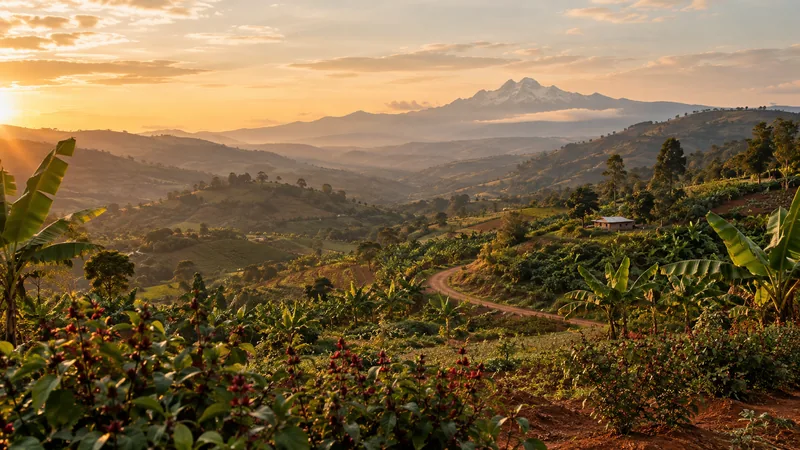
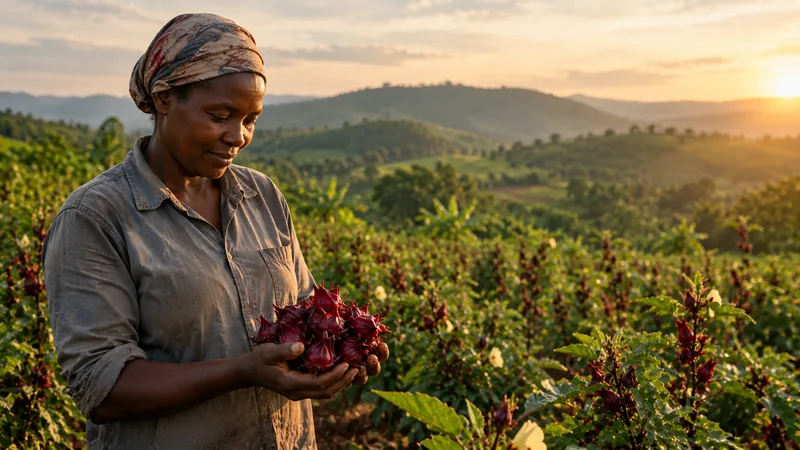
Every cup of hibiscus tea begins on a hillside. On our farm in Giaki, Meru County, that hillside is where a small seed becomes a plant taller than a grown child, heavy with the deep red calyces that give hibiscus its colour and its tart, cranberry-like taste.

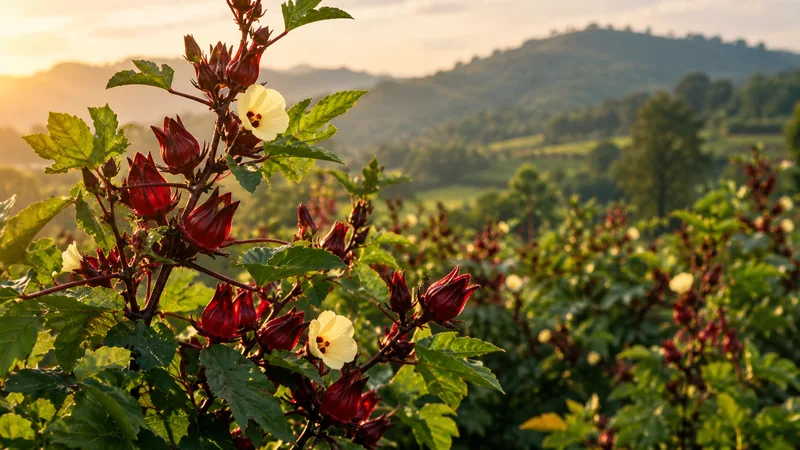
A quick clarification, because it surprises many people: the red part we harvest is not the flower. Hibiscus flowers are pale and short-lived. Once a flower fades, the fleshy calyx at its base swells and turns crimson, wrapping the seed pod. That calyx is what we pick, dry and turn into tea.

The cycle begins with seed

We keep seed from each harvest. Instead of buying new seed every season, we set aside the pods from our healthiest plants and plant them again. It means we know exactly where our seed comes from and how it performs on our soil, and it keeps the cost of growing low. That same habit will matter even more when we bring outgrower farmers into the model, because we can hand them seed whose quality we already understand.

Four to six months to harvest

Hibiscus is a short-cycle crop. From planting to the first harvest takes roughly four to six months, and with good management a second cycle is possible within the same year. For a household with no savings to wait years for a tree crop to mature, that speed matters: income arrives within a season.

It is also a forgiving crop. Hibiscus does not demand prime land. It grows well on marginal plots and field margins, the kind of land that is often left idle. Today our seven acres carry hibiscus and lemongrass side by side, and the work of tending them is shared by five women and three young people from the surrounding community.

What happens once the plant matures

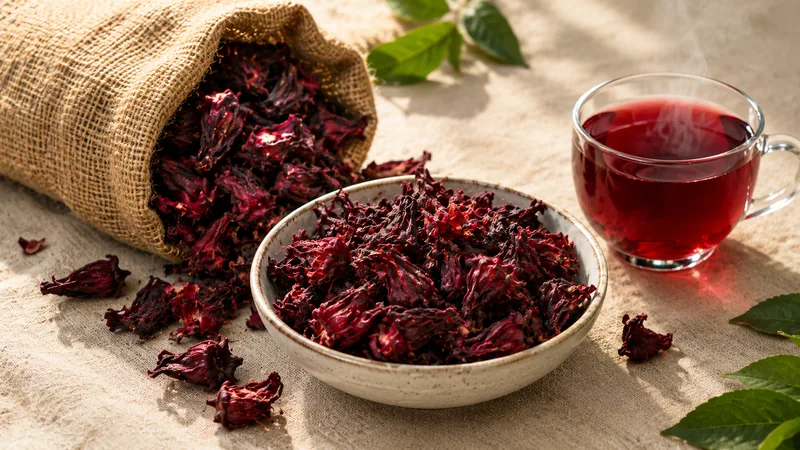
When the calyces are plump and deep red, the harvest begins. They are picked by hand, separated from the seed pods, cleaned and spread out to dry. Once dry, they are sorted and graded, and then they are ready for the next step of their journey: into tea, into jam, and into the hands of the partners who carry them to market.

In the coming weeks we will walk through each stage of that journey in more detail, from harvest day to the grading table. For now, the main thing to remember is simple. Good hibiscus is grown slowly, picked at the right moment, and handled with care at every step.
3 min read

Harvest Day: Reading the Calyx and Drying It Right

Pick too early and the colour is pale; pick too late and the calyx turns tough. Here is how we decide when to harvest, and how drying makes or breaks quality.

Read more

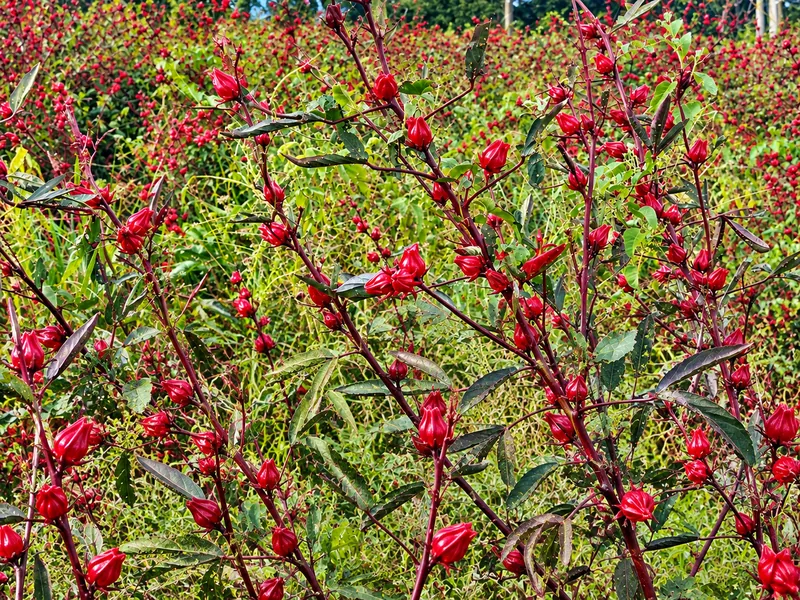
On harvest days the farm starts early. The women and young people who work our hibiscus walk the rows with baskets, and each person is looking for the same signs: a calyx that is plump, firm and a deep, even red.

Timing is everything

A hibiscus calyx is ready roughly two to three weeks after the flower fades. Picked too early, it is small and pale, and the finished tea tastes thin. Left too long on the plant, the calyx turns fibrous and tough, and the colour dulls. The sweet spot is short, which is why we harvest by hand and on a regular rhythm rather than all at once. A good picker learns the rhythm of each plant and can tell by sight and touch which calyces are ready today and which can wait for the next round.

At the drying area, the calyces are separated from the seed pods. The pods are not waste. We set the best of them aside as seed for the next planting, which closes the loop between this harvest and the next season.

Drying is where quality is won or lost

Freshly picked calyces are full of water, and they begin to spoil quickly if they are left in a heap. So they go straight onto clean, raised drying racks, spread in a thin layer where air can move freely underneath. We sun-dry them, turn them regularly so they dry evenly, and cover or move them whenever rain or heavy dust threatens.

The goal is a calyx that is crisp and brittle, one that snaps rather than bends, with a rich, deep maroon colour. Dried too slowly or stored while still damp, hibiscus can develop mould and lose its colour. Dried too harshly, it loses flavour. Patience and attention matter more than any machine.

Sorting and grading

Once dry, every batch is sorted by hand. Stems, leaves and any damaged pieces are removed, and the calyces are graded by size, colour and condition. Whole, deep-red pieces make the highest grade. Grading matters because buyers need to know exactly what they are getting, and because it rewards the care that went into growing and drying the crop.

None of this requires expensive equipment. It requires clean surfaces, good records and people who take pride in the work. As we invest in better drying infrastructure, those same principles will stay at the centre of how we operate.

2 min read

Five Women, Three Youth, One Farm: The People Behind Our Hibiscus

Oliveroot was built to put income in the hands of women and young people. Here is the thinking behind the model, and the team that makes it work every day.

Read more

Behind every packet of hibiscus is a group of people who got up early to grow it. On our Giaki farm that group is five women and three young people, led on the ground by co-founder Edna Gakii, who coordinates field operations, organises labour and keeps the work moving.

The gap we set out to close

Across Meru, farm income is concentrated in a few established cash crops such as maize. Those crops need good land, years of investment and significant capital, and their proceeds are often controlled by the male head of the household. Women contribute a large share of the labour but control only a small share of the income. Young people are often shut out altogether, because entry requires land they do not own.

We did not want to answer this with aid. We wanted a business in which income for women and youth is designed in from the start, not added on later.

Why hibiscus makes that possible

Hibiscus suits the problem. It is a short-cycle crop, so income arrives within a season. It grows on marginal plots rather than prime land. And because it does not fit into existing household patterns, its income can be structured to be paid directly to the person who grew it.

The work is also labour-intensive in exactly the right places. Picking, depetaling, cleaning, drying, sorting and processing all create paid seasonal work close to home, which is a realistic first step into the agricultural economy for young people.

Dignity matters to us as much as income. When we share photographs or stories from the farm, we do so with consent and with care for accuracy, because the people behind the crop are the point of this business, not decoration for it.

Skills that last

A job on the farm is more than a wage. People learn how to grow a crop well, how to handle it hygienically, how to keep honest records and how to meet a quality standard. Those skills travel with them, whether they stay on our farm, start plots of their own or join our network of outgrower farmers as it grows.

That is the heart of the Oliveroot model: a profitable business that earns its place in the market through quality, and that shares what it earns with the people who make it possible. One flower, one farmer, one cup at a time.

3 min read

From Our Drying Racks to the Blending Room: Working with SigPro Beverages

A good harvest only matters if it reaches the cup. Here is why selling partners like SigPro Beverages are so important to how our hibiscus finds its market.

Read more

Growing hibiscus is only half of the story. A crop that is beautifully grown and carefully dried still needs somewhere to go. That is where our partners come in, and SigPro Beverages is one of the most important.

Why a selling partner matters

For a young agribusiness, finding reliable buyers can be harder than growing the crop. A farm can produce excellent hibiscus and still struggle if it has no steady route to market, no clarity about what buyers want and no way of knowing whether prices will hold. A dependable partner changes that. It gives us something to plan around.

SigPro Beverages brings what a farm on a Meru hillside cannot easily build alone: experience in blending, packing and getting beverage products to the people who want to enjoy them. Our job is to deliver graded, properly dried hibiscus. Their job is to help turn ingredients into products that reach shelves and cups.

What buyers actually ask for

Working with a beverage company has sharpened how we think about quality. Buyers want consistency, so every batch needs to look and taste like the last. They want cleanliness, so drying and storage must be hygienic. And they want to be able to trust the paperwork, so our records must be clear and complete.

These are not obstacles. They are a roadmap. Each requirement tells us where to invest next, whether that is better drying racks, tighter grading or more careful record-keeping.

Then there is volume and timing. A beverage company plans its production in advance, so it needs to know roughly how much hibiscus will be available and when. That pushes us to plan our planting and harvest cycles carefully, and it is one more reason the possibility of two cycles a year is so valuable to us.

A partnership that shares the value

What we value most is that a relationship like this is a two-way street. When our hibiscus performs well in a product, it strengthens the case for the farm, and the farm’s income supports the women and young people who grow and process it. Every cup that sells helps keep that cycle going. It also gives the people on our farm a concrete answer to the question every grower asks: who is going to buy this?

We are grateful to SigPro Beverages for being part of that cycle, and we look forward to sharing more about what we are building together.

3 min read

Realizing the Tea Promise: Why the Tea Board of Kenya Matters to Us

Hibiscus is technically a herbal infusion, not tea, but we grow it in tea country. Here is what we learn from the Tea Board of Kenya and the industry it serves.

Read more

Kenya has a long and proud tea story. The country is one of the world’s leading tea exporters, and the words “Kenyan tea” carry a reputation for quality that took generations to build. As a young herbal brand, we think about that reputation every day.

Tea, or tisane?

Strictly speaking, hibiscus is not tea. Tea comes from the leaves of the Camellia sinensis plant, while hibiscus is a herbal infusion, also called a tisane, made from the dried calyces of a different plant. It is naturally caffeine-free, ruby-red and pleasantly tart. But it lives in the same world as tea: it is brewed in the same cups, sold on the same shelves and enjoyed by the same people. That shared setting is why we pay such close attention to how the tea industry works.

A standard to look up to

The Tea Board of Kenya oversees and promotes the country’s tea industry, and its tagline, Realizing the Tea Promise, is a good description of what we want for hibiscus: to show that a Kenyan product can be grown responsibly, handled properly and trusted at home and abroad.

We look to the Tea Board as a partner in learning. The industry it serves has already answered questions we are still working through. How do you keep quality consistent across many small growers? How do you build traceability from the field to the cup? How do you make sure the people who grow the crop share in its success?

What we are borrowing

Three lessons stand out. First, quality is built at the farm, not fixed at the factory. Second, farmers do best when they are organised, supported and paid fairly. Third, a strong reputation is earned slowly and lost quickly, so every batch matters.

There is also the lesson of patience. Tea is a crop of long relationships between growers, regulators and buyers, built season after season. We would rather grow our reputation steadily than chase quick wins.

These lessons shape how we are building our own model: starting on our own farm, proving the quality, and only then extending the model to a network of outgrower farmers.

Our ambition is to be a modest but worthy addition to Kenya’s beverage story, a herbal product that makes the country proud. We are grateful to the Tea Board of Kenya for the example it sets, and we look forward to deepening that relationship as we grow.

2 min read

Quality You Can Trust: The Kenya Bureau of Standards and Our Road to Certification

Standards can sound dry, but they protect customers and open doors for small producers. Here is how we think about the Kenya Bureau of Standards and the road ahead.

Read more

When you pick up a packet of tea in a shop, you rarely think about the system that stands behind it. Yet someone has decided what “safe” and “good” mean, and that someone is often a national standards body. In Kenya, that is the Kenya Bureau of Standards, known as KEBS.

What KEBS does

KEBS develops national standards, tests products and certifies those that meet the grade. Many Kenyans know its marks on packaged goods, which tell shoppers that a product has been checked against an agreed standard. For a consumer, that mark is a shortcut to trust. For a producer, it is a doorway into supermarkets, institutions and export markets that will not stock products without it. Standards also cover the unglamorous but essential details, such as how food products are labelled and what information a customer is entitled to see.

Why it matters to a small herbal producer

For a young company, certification can feel distant and expensive. We see it differently. The standards are, in effect, a clear checklist of how to run a good food business: clean premises, safe handling, accurate labelling, traceable ingredients and consistent quality.

That checklist maps closely onto the investments we already want to make. Better drying infrastructure. Proper record-keeping. Rigorous testing. Training for everyone who touches the product. Each one makes our hibiscus better and our business stronger, whether or not a certificate is hanging on the wall.

Our road ahead

We are at the beginning of that road. Our first priority is getting the fundamentals right on our own farm: hygiene in harvesting and drying, careful grading, and records that show exactly where every batch came from. Then comes working toward the certifications required for premium markets, so that our hibiscus tea and jam can compete on shelves with confidence.

Along the way we will share what we learn, including the parts that are slow or difficult, because other small producers face the same questions.

We know this will take time, patience and support. That is why we value our relationship with KEBS. A standards body is not just an inspector; it is a source of guidance for companies that want to do things properly.

Quality, for us, is a promise to the people who drink what we grow and to the women and young people who grow it. Standards help us keep that promise, one batch at a time.

Stay close to the harvest

A new story from the farm, every week

Join the newsletter for the latest stories, harvest updates and partnership news from Oliveroot.